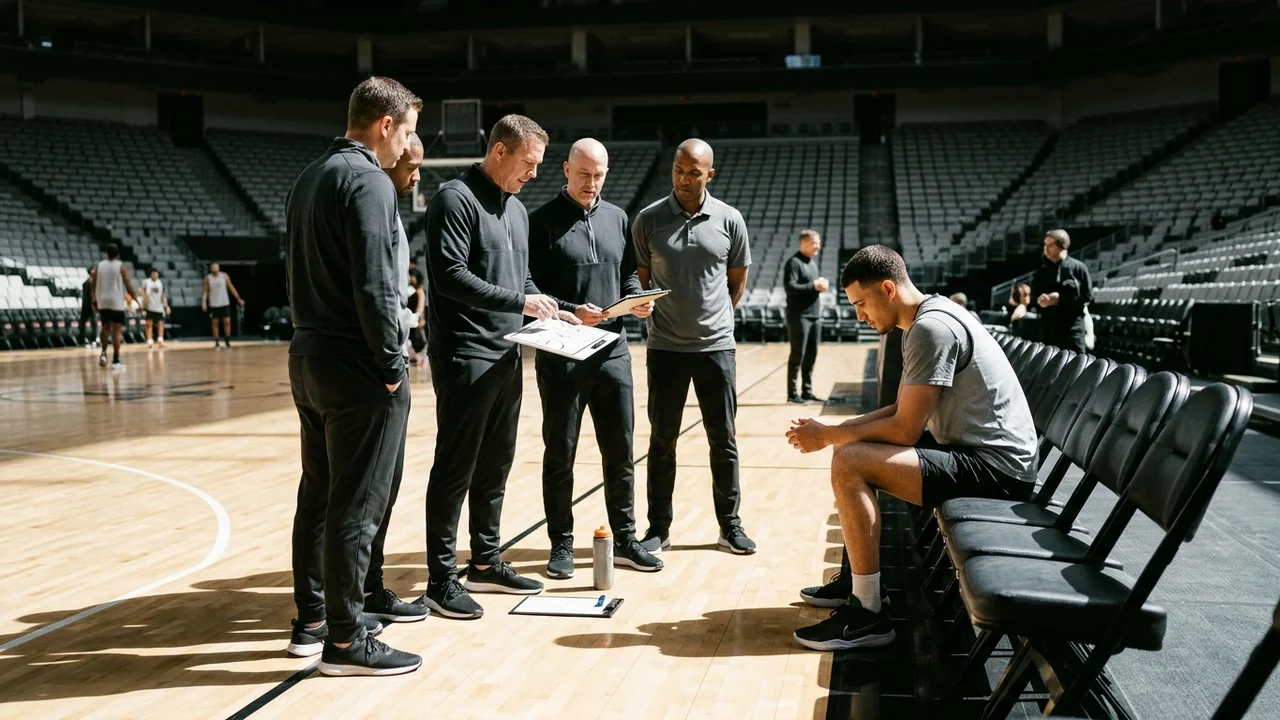
Tactical shifts, not trophy counts, have prep coaches crowding film rooms this summer. MAI’s new model for prep basketball has set off a wave of debate among basketball tacticians, especially around the redefinition of point guard leadership within their system. The conversation centers less on individual skill and more on how the lead guard orchestrates pressing systems, initiates offensive sets, and interprets spacing to counter modern defensive schemes.
“You watch MAI on tape and it’s obvious their point guard isn’t just calling plays, he’s dictating the entire geometry of the halfcourt,” said one coach, who requested anonymity. MAI’s focus on high-IQ reads and relentless tempo forces opponents into uncomfortable switches, leveraging quick decision-making from the lead guard.
From Set Plays to Flow: How MAI’s System Forces the Issue

Rival coaches are struck by how MAI’s approach diverges from tradition. Where point guards once slowed the game, controlled the clock, and called set plays from the sideline. MAI has flipped the script. Their lead guard now serves as the catalyst for dynamic ball movement and off-ball screening, often initiating offense with an early drag screen or deep entry.
Film shows MAI’s point guards rarely bringing the ball up in isolation. Instead, they probe constantly, using quick drag screens to manipulate matchups and trigger early help from defenders. This collapses opposing formations, forces rotations, and opens up weak-side shooters. Leadership isn’t measured by “hero ball” moments, but by how efficiently the guard bends the defense and creates opportunities within the structure.
MAI’s pressing systems also stand out. The point guard’s anticipation and communication drive the press, which is less about raw athleticism and more about reading passing lanes, timing traps, and syncing the second line. In these moments, the point guard’s voice orchestrates the entire formation, a sharp break from the stoic floor generals of past decades.
Analysts agree: the new model values spatial awareness over scoring prowess. The key question has shifted from who can break down a defender to who can recognize when to trigger a flare screen or call for a quick reversal. Some compare MAI’s approach to European models, where the point guard acts as an on-court tactician, orchestrating both halfcourt and transition phases.
This evolution is sparking interest beyond the hardwood. Observers are starting to examine how these changes in lead guard play might affect those who want to compare basketball outcomes across eras, given the shifting nature of leadership and formation dynamics.
Positional Fluidity and the Challenge to Old-School Hierarchies
MAI’s model is upending positional hierarchies. Coaches now question whether the classic “pass-first” or “score-first” labels have any relevance. Adaptability has become the new standard. Under MAI’s vision, the modern point guard must flow seamlessly from orchestrator to secondary cutter to defensive disruptor, sometimes all within a single possession.
“You can’t just have a floor general who pounds the rock and waits for a set to develop. MAI’s guys are reading, reacting, and relocating. The ball never sticks,” said one prep coach. This constant movement demands enormous cognitive effort from the lead guard, who must read both man and zone, anticipate traps, and communicate switches in real time.
Formations bend to the point guard’s strengths. Against zone presses. MAI’s system puts the guard at the center of a three-out, two-in look, enabling quick skip passes and high-post flashes. When facing man-to-man, the same guard sets ghost screens or flares into space, stretching defensive coverages and exposing traditional help principles.
Some see this as the natural evolution of the position. Others view it as a departure from the leadership-by-composure model that once defined championship teams. Either way, the impact on training is clear. Coaches across the prep landscape are now emphasizing split-second reads, versatile footwork, and two-way communication, aiming to develop the kind of multi-positional intelligence MAI’s system demands.
The conversation is far from settled. MAI’s approach is already shaping how the next generation of point guards are coached, evaluated, and ultimately, how they are asked to lead.