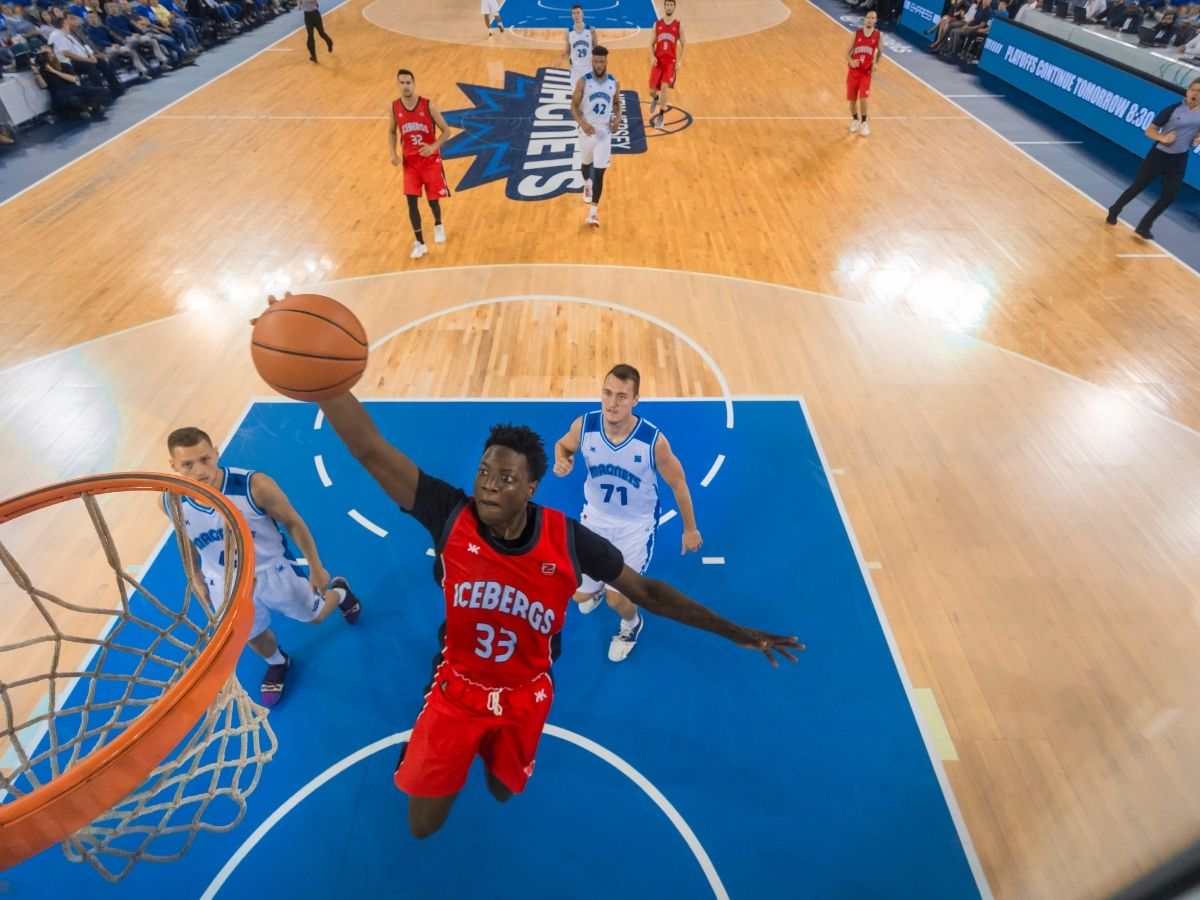
The NBA In-Season Tournament, which kicked off on Nov 12, has quickly become a focal point of excitement for basketball fans eager to witness fresh rivalries and high-stakes matchups nestled within the regular season. This tournament blends the intensity of playoff basketball with the unpredictability of early-season play, creating a dynamic group stage that determines which teams advance to an elimination knockout bracket. As the group standings tighten and must-win games loom, the drama escalates, fueled by precise tiebreaker rules that could make or break team fortunes. From top contenders clinching spots to underdogs fighting for wild-card bids, every possession counts in this riveting format that is reshaping the NBA calendar.
Fans tracking the tournament are engrossed in the unfolding battle among six groups, each comprising five teams divided evenly between the Eastern and Western Conferences. With each team playing four group games in round-robin style – two home and two away – the quest to top their group or secure a coveted wild-card spot heightens the stakes on Tuesdays and Fridays until early December. The upcoming knockout rounds promise intense single-elimination clashes culminating in a championship showdown in Las Vegas, underscoring the evolving landscape of midseason competition in professional basketball.
- Six groups of five NBA teams each, split evenly across East and West Conferences, compete in group play.
- Group play games started on November 12 and conclude by December 3, featuring intense round-robin matchups.
- Eight teams advance to the knockout stage: each group winner plus one wild-card team per conference.
- Tiebreakers such as head-to-head records, point differential, and regular season standings determine advancement.
- Knockout rounds are single elimination, leading to semifinals and finals held in Las Vegas mid-December.
Understanding NBA In-Season Tournament Group Standings and Their Impact on Playoff Seeding
The group standings during the NBA In-Season Tournament are critical not only for tournament advancement but also for shaping the larger narrative of the NBA season. Each team’s performance in their assigned group directly affects their progression to the knockout phase, adding gravity to every group game. The groups themselves were meticulously assembled based on last season’s win-loss records, creating balanced yet fiercely competitive pods.
Within each group, teams face off once, meaning every game carries immense value. A 3-0 start, as seen with the Orlando Magic in East Group A and the Milwaukee Bucks in East Group B, places teams in an enviable position but is by no means a guaranteed ticket to the knockout rounds. A loss could completely reopen the standings, especially given the single-match face-offs that form the entire group schedule.
When it comes to playoff seeding implications, the stakes become amplified. While the NBA Cup games count toward regular-season records, the possibility of fast-tracking into a knockout stage presents both a physical and psychological benefit to teams. Winners gain momentum and a platform to showcase their depth and adaptability under high-pressure scenarios. Conversely, teams facing elimination must rapidly recalibrate strategies to avoid an early exit from the tournament while preserving their season objectives.
- The NBA In-Season Tournament groups offer a mini-league format, emphasizing consistent performance over four games.
- Teams seek to top their groups by achieving the best win-loss record against four opponents.
- Securing a group win ensures automatic advancement to the knockout rounds, a crucial milestone.
- The concept of a wild-card spot rewards the best second-place teams, offering a second path to the playoffs.
- These standings provide intriguing matchups that test team rotations and tactical approaches early in the season.
| Group | Leading Teams | Win-Loss Status | Potential Impact |
|---|---|---|---|
| East Group A | Orlando Magic, New York Knicks | Both 3-0 | Winner advances directly; loser competes for wild-card |
| East Group B | Milwaukee Bucks, Detroit Pistons | Both 3-0 | Winner clinches group; loser vies for wild-card |
| West Group B | Oklahoma City Thunder, Phoenix Suns, San Antonio Spurs | Each 2-1 | Group still wide open; multiple wild-card contenders |

Decoding the NBA In-Season Tournament Tiebreakers: How Close Standings Get Resolved
As the competition intensifies, tiebreakers become pivotal in breaking deadlocks in Group Standings. The NBA tournament has established a clear hierarchy for resolving ties between teams with identical win percentages to ensure fairness and competitive clarity. This system highlights not just who wins games but how decisively they do so.
The primary tiebreaker is the head-to-head record between the tied teams, acknowledging the outcome of direct confrontations. This is straightforward in cases where two teams share a record and have faced each other once during group play. However, with multiple teams tied, the tiebreak procedure scales in complexity.
Subsequently, the point differential accumulated in the group stage games comes into play, excluding overtime scoring, which fascinatingly doesn’t impact the differential to discard anomalies introduced by blown leads or late run-ups in overtime. This rule, unique to the tournament, preserves the integrity of regulation performance.
In cases where the point differential is still insufficient to settle ties, the total points scored during regulation across group games serves as the next criterion. Should all these measures fail to separate teams, the regular-season records from the 2023-24 campaign provide an additional benchmark, reflecting broader season consistency.
- Step 1: Head-to-head win percentage among tied teams.
- Step 2: Point differential from all four group games (excluding overtime).
- Step 3: Total points scored in regulation across group games.
- Step 4: 2023-24 regular season record if all else fails.
- Step 5: Random drawing as last resort.
| Tiebreak Step | Description | Special Notes |
|---|---|---|
| Head-to-Head | Win percentage in matches between tied teams | Directly decided by group games results |
| Point Differential | Difference in points scored vs points allowed in the 4 games | Overtime scoring excluded (OT = 0 differential) |
| Total Points Scored | Sum of points scored during regulation | Encourages offensive efficiency |
| Regular Season Record | Win-loss record from 2023-24 season | Reflects team consistency beyond tournament |
| Random Drawing | Final method to break ties if all else fails | Extremely rare in practice |
The meticulous structure ensures that upcoming NBA In-Season Tournament games become more than just simple group contests—they’re a showcase of strategic execution. Coaches may emphasize not just the win, but the margin of victory and the pace of scoring to influence potential tiebreakers.
Must-Win Games on Nov 12 and Beyond: High Stakes Battles Across Groups
November 12 marked a crucial moment in the NBA In-Season Tournament as teams jostled to make a statement in their group contests. Some matchups were must-win, especially for squads aiming to claim group dominance or maintain wild-card viability, which adds an extra layer of drama to the tournament bracket chase.
For example, the East Group A showdown between the Orlando Magic and New York Knicks stood out—each team bringing a perfect 3-0 slate into their clash. Victory in this fixture would almost guarantee group supremacy and direct entry into the knockout stages, while the loser would still harbor hopes for the wild-card, making the stakes intense.
On the Western front, West Group B has been tightly contested with three teams – Oklahoma City Thunder, Phoenix Suns, and San Antonio Spurs – all holding similar records at 2-1. Their upcoming games, including Thunder vs. Utah Jazz and Suns vs. Spurs, are pivotal in deciding who clinches the group or, at the very least, the wild-card qualifier.
- East Group A’s Magic vs. Knicks battle to secure group leadership.
- East Group B’s Bucks vs. Pistons clash with playoff implications.
- West Group B’s three-team logjam encouraging high-intensity matchups.
- Wild-card spots rely heavily on outcomes of must-win contests late in group play.
- Every possession in these games shifts tournament brackets and potential playoff momentum.
| Must-Win Game | Group | Impact | Date |
|---|---|---|---|
| Magic vs Knicks | East Group A | Group winner advances, loser vies for wild-card | Nov 12 |
| Bucks vs Pistons | East Group B | Direct knockout round berth for winner | Nov 12 |
| Suns vs Spurs | West Group B | Critical for group leadership; influences wild-card race | Nov 12 |
How Teams Are Navigating the Tournament Format: Strategies and Adaptations
The unique format of the NBA In-Season Tournament requires teams and coaches to adjust their approach compared to standard regular-season play. With only four group games to prove eligibility for the knockout rounds, teams cannot afford slow starts or experimental lineups. Every game is a must-win or at least must-earn scenario.
Some teams prioritize fielding their stars to maximize chances of winning, understanding that the payoff extends beyond the tournament, as these games also count toward regular-season standings. Others juggle roster health carefully, balancing the benefits of advancing with the risks of player fatigue or injury. Tactical decisions have become more pronounced as coaches weigh how much to push during group play versus conserving energy for traditional playoff aspirations.
Moreover, the drive for points has altered offensive dynamics; teams often aim not only to win but to ensure positive point differentials that can serve as crucial tiebreakers. Defensive discipline becomes equally important, given that allowing too many points harms overall differential and postseason prospects.
- Teams prioritize star minutes to secure immediate wins in short group stages.
- Strategic pacing of the squad balances tournament ambitions with season-long goals.
- Margin of victory is emphasized due to its influence on tournament tiebreakers.
- Defensive schemes focus on limiting opponents’ scoring even if it means slower-paced games.
- Psychological preparation is key in managing pressure-filled must-win environments.
| Strategy Aspect | Teams’ Focus | Examples |
|---|---|---|
| Star Player Utilization | Maximize starter minutes in must-win games | Magic deploying key players fully against Knicks |
| Roster Management | Balance load to stave off fatigue | Suns resting key bench players selectively |
| Point Differential Focus | Push for wider wins when possible | Bucks securing strong margins over Pistons |
| Defensive Intensity | Limit opponent scoring to improve standings | Thunder adopting conservative defense schemes |
Looking Ahead: Tournament Bracket and Potential Playoff Implications
As the group stages wrap up, all eyes turn toward the formation of the knockout stage bracket. The top six group winners combined with two wild-card entrants will face off in single-elimination contests, each game amplifying the stakes akin to the NBA Playoffs. This bracket structure injects fresh life into the midseason calendar and offers a glimpse of potential playoff rivalries and future team dynamics.
The knockout rounds not only deliver high-octane basketball but also substantial financial incentives for players and coaching staffs. With prize money distributed according to how far teams advance — including $50,000 for quarterfinal achievements up to a $500,000 reward for the champions — the tournament meshes passion with professional motivation. This financial aspect adds another compelling dimension to these must-win games, fueling competitiveness and driving remarkable performances.
Furthermore, the location of the semifinals and final in Las Vegas turns the NBA Cup into a marquee event, transforming the city into a basketball hotbed for those mid-December days. Fans and media alike will be captivated by the drama, intensity, and intensity of the tournament ladder, providing snapshots of NBA teams’ capabilities in a condensed, pressure-packed environment.
- Eight teams form the knockout stage: six group winners plus an East and West wild-card.
- Quarterfinals occur on Dec. 10-11, with the top seeds hosting home games.
- Semifinals and Finals take place Dec. 14 and 17 in Las Vegas at the T-Mobile Arena.
- Prize money incentives motivate players and coaching staffs through each stage.
- The tournament may affect playoff momentum and highlight emerging stars.
| Round | Date | Location | Format | Notes |
|---|---|---|---|---|
| Quarterfinals | Dec 10-11 | Home venues of top two seeds | Single elimination | Winners advance to Las Vegas |
| Semifinals | Dec 14 | T-Mobile Arena, Las Vegas | Single elimination | Top showcase event of the tournament |
| Final | Dec 17 | T-Mobile Arena, Las Vegas | Single elimination | Championship game sealing $500,000 per player prize |
With the tournament unfolding amid the regular season, its ripple effects may stretch into the NBA playoffs. Teams with deep runs gain confidence and sharpen competitive edges that could translate into postseason success. Meanwhile, early exits may prompt teams to retool strategies and rest key players for the grind ahead. To explore how analysts are weighing in on these developments, readers may find insightful commentary at expert NBA analysis informative and engaging.
How does the NBA In-Season Tournament affect regular season standings?
All NBA Cup group play and knockout round games count toward the regular-season record, making every tournament game critical for overall season performance and playoff positioning.
What criteria decide tiebreakers in the group standings?
Tiebreakers include head-to-head records, point differential during regulation, total points scored, the previous regular season record, and if needed, a random drawing.
Are players rewarded financially in the NBA Cup?
Yes, players and coaches receive prize money progressively from $50,000 at quarterfinals up to $500,000 per player for winning the championship, enhancing competition stakes.
Which teams have clinched knockout round spots so far?
As of now, the Golden State Warriors, Houston Rockets, and Atlanta Hawks have secured knockout round berths, with several other teams vying for remaining spots.
How is the knockout round structured in the NBA In-Season Tournament?
The knockout round is a single-elimination bracket with quarterfinals hosted by top seeds, followed by semifinals and finals played in Las Vegas’ T-Mobile Arena.