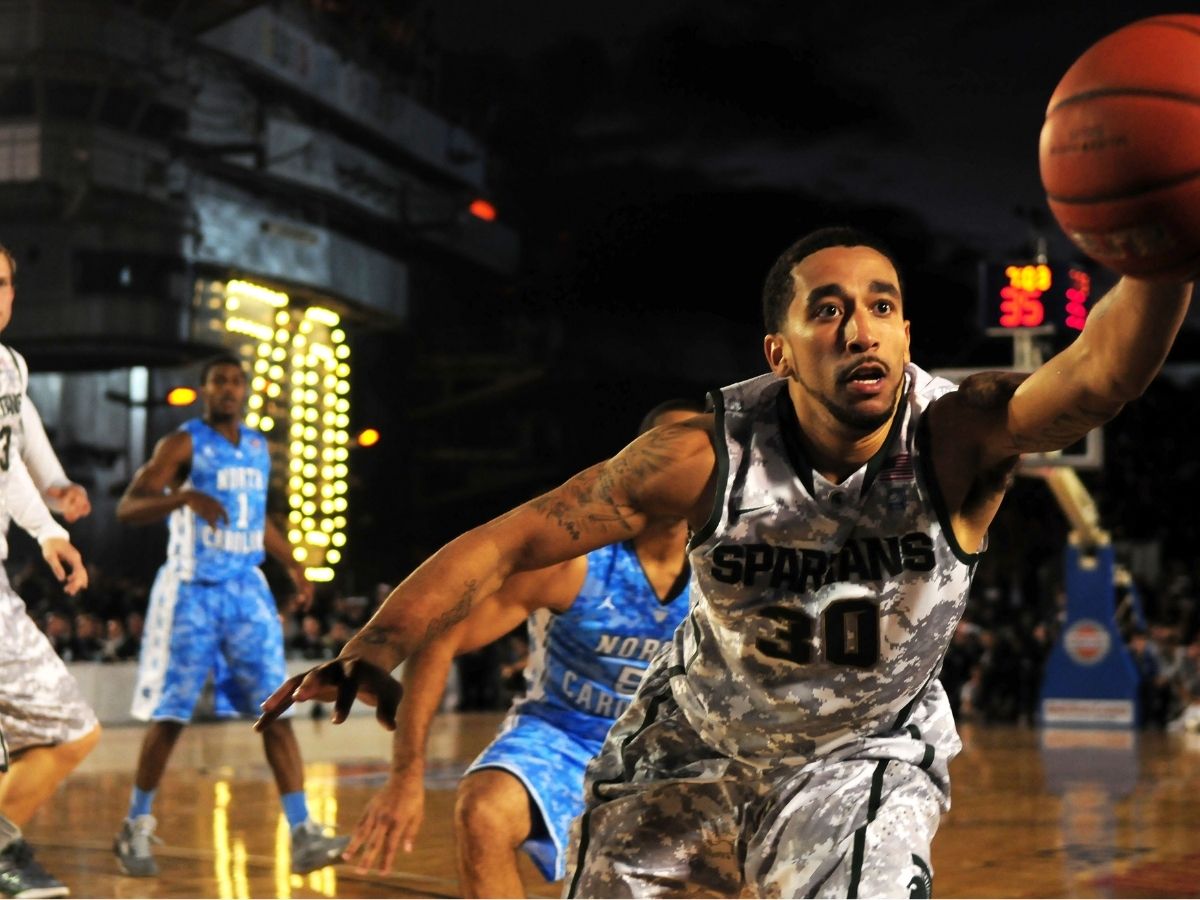
In the high-octane world of basketball, the transition offense serves as a dazzling spectacle where speed, precision, and sharp decision-making converge to dismantle defenses before they even settle. The concepts of Pace, Spacing, and Rim Pressure are central to this thrilling phase of play, shaping how teams outmaneuver opponents and capitalize on fleeting moments of opportunity. With the game’s rapid evolution leading into 2025, understanding these elements is more crucial than ever for players and coaches aiming to harness the raw speed of the fast break while maintaining elegant court balance.
The transition offense has revolutionized basketball strategy, promoting a game tempo that favors relentless movement and aggressive showcases of skill. Fans and players alike witness the magic when squads burst down the hardwood, exploiting defensive gaps created by precise spacing and unyielding rim attacks. Meanwhile, the ability to sustain offensive pressure near the basket underpins success, illustrating why rim protection is simultaneously a defensive necessity and an offensive objective.
Capturing the essence of this system means dissecting each component and exploring how they interconnect to form an overwhelming offensive mechanism. Teams must consistently push tempo to maintain possession advantages but also remain disciplined in spacing to avoid clogging lanes and minimize defensive help. Consequently, rim pressure becomes not just a method of finishing plays but a strategic tool to force defenders into collapse and create perimeter shooting opportunities.
These themes permeate all levels of basketball—from the hyper-athletic NBA courts to college arenas and high school gyms—thereby making pace, spacing, and rim pressure foundational concepts that define modern basketball culture in the mid-2020s. To follow this dynamic interplay is to witness basketball in its purest, most electrifying form.
Whether delving into specific offensive sets or evaluating how these principles manifest in game scenarios, the story of the transition offense remains one of athletic artistry, psychological warfare, and passionate execution—key ingredients that bring the sport’s relentless energy to life.
The Role of Pace in Transition Offense: Accelerating Game Tempo for Maximum Advantage
The essence of pace in transition offense lies in the urgency and speed with which a team moves the ball from defense to offense, seeking to capitalize on moments when the opposing defense is unsettled. Pushing the ball rapidly after rebounds or turnovers can overwhelm defenders, creating scenarios where mis-matches and open shots become plentiful.
Playing with a high tempo creates more possessions per game, directly influencing scoring opportunities and dictating defensive strategies. Coaches in the NBA and various leagues emphasize the first 6 to 10 seconds of possession as the prime window to strike before defenses lock in. As a result, teams have developed systems that encourage quick outlet passes and aggressive dribbling to exploit these early moments.
Examples of teams thriving on pace include those often highlighted in fast-paced season openers, where pushing tempo results in a flood of early points. Yet, the challenge lies in balancing speed with control; hasty decisions can yield turnovers, so players must be trained to push quickly but smartly—mirroring the wisdom in John Wooden’s mantra: “Be quick, but never hurry.”
Successful pace-oriented teams use strategic player positioning to ensure lanes remain open for fast breaks, typically featuring a rim-runner sprinting down the middle accompanied by wing players filling the lanes on the sides. This structure stretches defenses, forcing defenders to cover expansive ground quickly.
- Quick outlet passes immediately after a rebound or turnover to initiate transition
- Speed dribbling by ball handlers to penetrate gaps and draw defense
- Players sprinting hard to fill lanes: middle lane runner plus wing lanes
- Capitalize on spacing to isolate defenders and generate mismatches
- Aim to finish transition possessions within the first 10 seconds
| Element | Impact on Pace | Example from Game |
|---|---|---|
| Outlet Passing | Speeds transition initiation, catches defense off-guard | Guard receiving quick outlet after defensive rebound and charging |
| Player Sprinting | Fills lanes to create spacing and passing options | Forward running sidelines open for catch and shoot opportunities |
| Controlled Ball Handling | Maintains possession under pressure, reduces turnovers | Point guard driving baseline to break down defense |
| Shot Clock Management | Encourages taking early, high-value shots | Team attempting fast break shot inside 8 seconds |
More than just a speed game, pace is a force multiplier when executed with skill, conditioning, and tactical sense. The emerging trend, as seen in recent previews like Lakers vs Suns matchups, revolves around rapid transition offenses dictating game rhythm and forcing defensive errors.
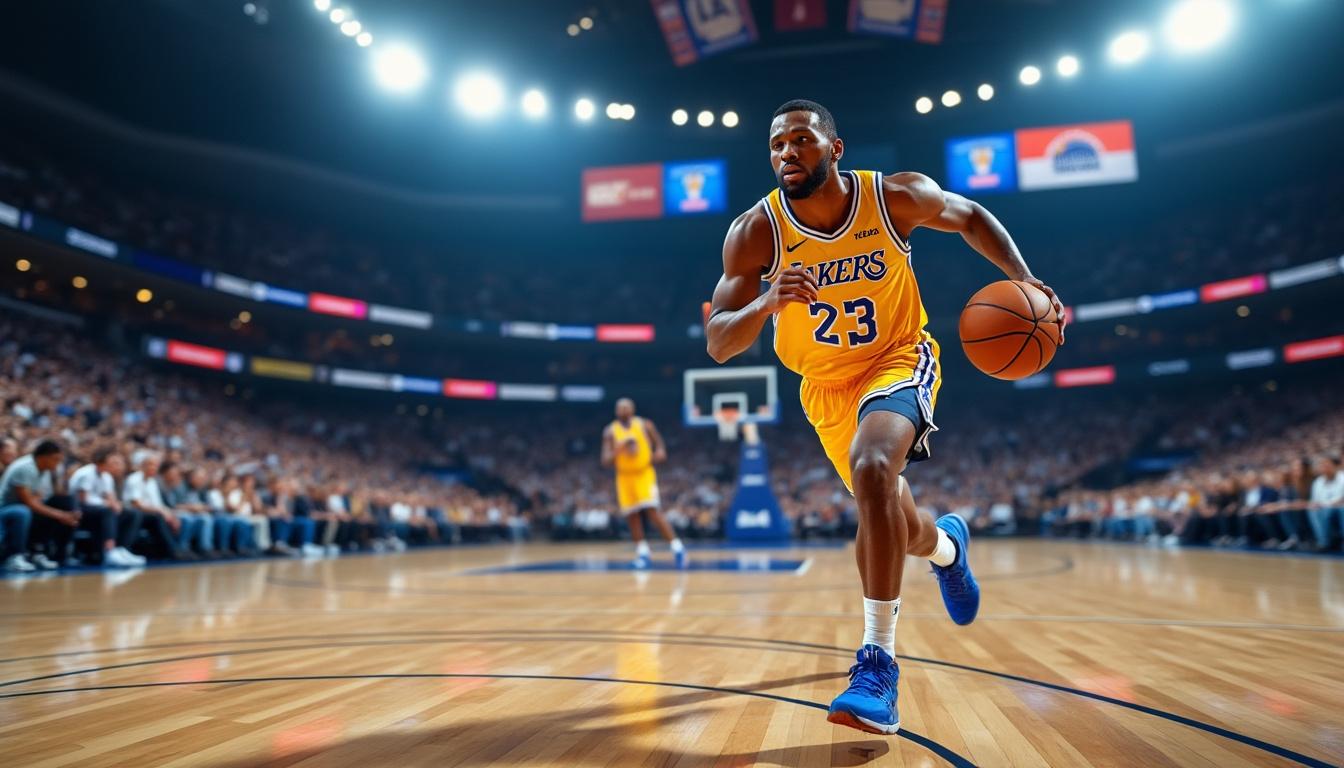
Spacing Fundamentals: Creating Court Balance and Offensive Lanes for Efficient Scoring
Spacing in transition offense is fundamental to stretching the defense and generating clear lanes for driving and shooting. The layout of players across the court must avoid clustering, keeping defenders spread thin and unable to effectively help on drives or close out on shooters.
Modern offenses have embraced a 5-out formation or high horn sets to position all five players around or beyond the three-point arc. This movement invites defenders to cover more ground, resulting in disruptions to their traditional help defense schemes. This dynamic becomes even more pronounced as some post players evolve into perimeter threats, blending the lines between big men and shooters.
Implementing spacing in transition involves constant player motion, cutting, screening, and locating soft spots on the floor to receive the ball. The offense thrives when it can fluidly swing the ball and force defenders into uncomfortable rotations, often leading to open looks or drives to the basket.
- Use 5-out or high horn sets to maximize court spacing
- Position bigs on the perimeter to pull defenders away from the rim
- Leverage constant cuts and screens to create open shooting lanes
- Encourage wings to be versatile shooters and cutters, creating multiple threats
- Avoid mid-range shots to maintain floor balance and spacing integrity
| Spacing Principle | Offensive Benefit | Illustrative Example |
|---|---|---|
| 5-Out Formation | Opens driving lanes, spreads defense thin | Post player positioned at the arc, screens for guards |
| Player Movement | Creates defensive confusion, open shots | Wing runs baseline cut for a quick pass and shot attempt |
| Screening Actions | Disrupts defensive alignment, frees shooters | Double staggered screens at the top of the key |
| Perimeter Big Men | Forces defenders out, creates mismatches | Center sets a pick and pop from the three-point line |
As observed in the increasingly popular “Pace-and-Space” offenses dominating pro basketball, spacing complements pace by yielding high-efficiency scoring opportunities. This style’s growing footprint extends beyond the NBA into collegiate and high school programs, adapting to levels where space and shot quality hold utmost importance.
The finer points of spacing also factor in player roles, requiring point guards to be adept at dribble penetration and decision-making, wings to provide shooting and cutting threats, and big men to diversify their skill sets to include ball screens and perimeter shooting. This synergy, tied to pace, keeps the offense fluid and unpredictable.
Rim Pressure Explained: Forcing Defensive Collapses and Creating Finish Opportunities
The concept of rim pressure extends beyond sheer physicality near the basket; it embodies the offensive aggression applied to collapse defenses by attacking the paint relentlessly. Rim pressure increases the risk of defensive breakdowns, often resulting in fouls, easy layups, or kick-outs to open shooters.
Driving hard to the rim during transition capitalizes on defenders scrambling to recover, forcing quick decisions and positioning errors. The offensive players emphasize verticality and controlled aggression, maintaining balance while forcing defenders to commit. The result is a domino effect where rim pressure destabilizes the defense, opening up perimeter opportunities.
Teams such as those highlighted in EuroLeague 2025-26 previews illustrate how elite international squads integrate rim pressure into a holistic offense that blends fast break speed with surgical interior attacks. This multi-layered approach consistently challenges defenders at every level.
- Drive aggressively to the basket to initiate rim pressure
- Use high ball screens to create open driving lanes
- Roll or pop big men following screens to keep defense unsettled
- Kick out to open shooters when defense collapses
- Maintain quick ball movement to exploit shifting defenses
| Rim Pressure Tactic | Defensive Reaction | Offensive Result |
|---|---|---|
| High Ball-Screens with Roll/Pop | Defenders switch or hedge, causing communication errors | Opportunity for layup or open perimeter shot |
| Dribble Penetration | Defensive collapse on ball-handler | Kick-out to open 3-point shooters |
| Quick Passing | Defense out of position due to rotations | Creation of open lanes or shooters |
| Aggressive Cutting | Defensive confusion trying to track movement | Scoring at rim or easy assists |
The combination of rim pressure with pace and spacing represents a potent offensive trifecta. Teams that master this often dominate games by forcing opponents into tough choices and exploiting defensive lapses. The balanced interplay ensures that no particular strategy can be easily countered without sacrificing defensive integrity.
Offensive Tactics in Transition: Structured Plays and Decision-Making for High Efficiency
Transition offense is not just about raw speed; it is equally about intelligent offensive tactics that maximize shot quality and minimize wasted possessions. Structured sets such as the 5-Out “Stagger Flare” and Phoenix Mercury’s “Double Drag” screen action have emerged as textbook examples of how to combine pace, spacing, and rim pressure effectively.
The 5-Out “Stagger Flare” formation hinges on guards sprinting their lanes while bigs trail, setting staggered screens to free shooters. This creates open catch-and-shoot situations and slipping options that pressure defenses to decide between guarding shooters or the rim.
The “Double Drag” screen offense involves big forwards setting consecutive screens for the ball-handler, enabling dribble penetration or pick-and-pop plays. The trailing big rolls to the basket for potential finishes, while the screener might pop out for a three-point shot. This secondary break keeps defensive units on their toes and unable to predict the next threat.
- Utilize staggered screens to free shooters and cutters
- Exploit ball-handler skills in pick and roll/pop situations
- Maintain constant motion to challenge defensive adjustments
- Transition quickly into secondary break formations if fast break is stopped
- Promote aggressive rim attacking balanced with perimeter shooting
| Play Type | Key Feature | Strategic Advantage |
|---|---|---|
| 5-Out “Stagger Flare” | Multiple stagger screens for opens shooters | Creates open shots and slipping cutters |
| Double Drag Screen | Consecutive screens allowing dribble-drive | Allows for multiple scoring options: roll or pop |
| Early Offense “Triple Gap” | 4-Out, 1-In formation attacking rim or hitting open shooters | Forces defense to choose between rim and perimeter coverage |
Teams featured in major NBA previews such as the Celtics vs Warriors game demonstrate how fluidly these tactics can be adapted to real-game conditions. Success relies on players’ decision-making skills, conditioning, and the coach’s ability to read defensive tendencies.
Mastering Court Spacing and Defensive Pressure: Balancing Offense and Defense in Transition
Balancing wide court spacing with the need to press offensive rim pressure while managing incoming defensive pressure is a high-wire act that distinguishes great transition offenses. The defense, under pressure to prevent easy fast-break baskets, must quickly reorganize while accounting for spread shooters and rim attackers.
Teams that effectively combine spacing and pace often force their opponents into uncomfortable defensive matchups and increased fatigue. This defensive pressure compounds over the course of the game, leading to more switches, mismatches, and ultimately scoring opportunities.
Developing a transition offense that remains deadly while respecting defensive adjustments involves detailed player coordination and understanding game tempo shifts. Teams that can push tempo without succumbing to turnovers, while maintaining structural spacing, post superior statistics in shot quality and scoring efficiency as noted in shot quality reports.
- Communicate constantly to handle defensive switches and pressures
- Use spacing to create isolation plays and drive lanes
- Condition players to sustain pace late in games
- Adapt quickly from transition to half-court offense if fast break pauses
- Leverage perimeter shooting to punish defensive overcommitment
| Adjustment | Benefit | Example from Recent NBA Games |
|---|---|---|
| Quick Shift to Half-Court | Maintains offensive rhythm when fast break is stopped | Celtics adapting against Warriors halftime adjustments |
| Effective Defensive Communication | Reduces defensive breakdowns under pressure | Teams limiting turnovers in late-game fast break attempts |
| Stamina and Conditioning | Allows sustained high pace throughout the game | Fastest teams dominating extended game periods |
| Spacing Emphasis | Creates open shots and clear driving lanes | Teams with high three-point attempt rates |
The interplay between offensive and defensive dynamics in transition remains one of basketball’s most captivating aspects, continually driving innovation in coaching and player development. Fans can expect even more refined strategies emerging as the 2025 season progresses, elevating game excitement and showcasing the brilliance of basketball strategy at its finest.
Why is pace so crucial in transition offense?
Pace increases the number of offensive possessions and forces the opposing defense to react quickly, often leading to scoring opportunities before the defense sets up.
How does spacing improve transition offense efficiency?
Good spacing stretches the defense, creating driving lanes for ball handlers and open shots for perimeter players, which boosts scoring chances.
What role does rim pressure play in creating open shots?
Aggressive rim attacks cause defenses to collapse, opening up kick-out opportunities for shooters and destabilizing defensive structures.
Can lower-level teams effectively use pace and space strategies?
While youth teams may lack skills for fully executing pace and space, introducing these principles early helps players develop decision-making and positional versatility for future play.
How do teams adapt when the fast break is stopped?
Teams transition quickly into secondary offense sets with high ball screens and dribble penetration to maintain pressure and exploit defensive weaknesses.