The Los Angeles Lakers have experienced a rollercoaster ride in their 2025 NBA season. After a turbulent start marked by uncertain rotations and early struggles on both ends of the floor, the team appears to be regaining form as late November unfolds. With a blend of veteran star power and emerging talent, the question fans and analysts alike are asking is whether the Lakers are finally forging the elusive two-way consistency that has eluded them in recent years. The stakes can’t be higher, as the team jostles for position in a fiercely competitive Western Conference. This ongoing evolution signals more than just incremental improvements; it hints at a possibility for the purple and gold to gear up for a strong playoff push.
From key offseason acquisitions like DeAndre Ayton and Marcus Smart, to the on-court chemistry forming around Luka Dončić and LeBron James, the Lakers are navigating through pressure with notable developments. The challenges posed by a challenging start, including balancing offensive firepower with defensive resilience, have tested both coach JJ Redick’s strategies and the players’ grit. This makes the current spell critical to assess, as it will determine if LA can sustain momentum and translate flashes of brilliance into a stable formula for success.
Throughout November’s games, the Lakers have been a fascinating case study in adjustments and adaptation. With lineups being fine-tuned and roles slowly solidifying, watching how the Lakers integrate new defensive schemes alongside their naturally dynamic offense reveals much about their future prospects. Observers have noted the team’s improved ability to guard without the ball and generate stops, alongside maintaining efficient scoring runs. However, the nuances of two-way consistency extend beyond cumulative stats; they delve into mental toughness, roster reliability, and tactical flexibility.
Experts track the Lakers’ form closely in online NBA power rankings and matchup previews, reflecting on their recent performances and projecting prospects for the rest of the season. The buzz isn’t just about individual stars, but about how the collective gel can help the team seize a higher standing in the playoff race. The blend of pace, defense, and sharp shooting through rotation players adds layers to the narrative that’s unfolding on the court night after night.
As LA pursues their 18th championship banner, every increment towards consistent two-way basketball counts. This piece explores multiple facets of the Lakers’ progress — examining their offense-defense balance, coaching decisions, roster depth, and the contributions of key role players who often slip under the radar. By dissecting November’s form check, the discussion contextualizes the Lakers’ journey from a rocky prelude to a potential breakthrough phase.
Key Points in Lakers’ November 2025 Form Evaluation:
- The integration of new defensive stalwarts like DeAndre Ayton improving the paint protection
- The leadership and clutch production from LeBron James amidst evolving lineups
- Luka Dončić’s role as both a primary playmaker and defensive attention magnet
- Emergence of two-way role players such as Austin Reaves bolstering depth
- Coach JJ Redick’s increasing tactical maturity in balancing rotations and late-game decisions
Evaluating the Lakers’ Defensive Transition Amid Tough November Fixtures
Defense has been a point of concern and focal adjustment for the Lakers throughout their early 2025 season. The departure of Anthony Davis in the previous season left a vacuum in the paint, creating vulnerability that opposing teams quickly exploited, particularly in clutch moments. In response, the Lakers aggressively sought reinforcements this offseason, acquiring DeAndre Ayton and Marcus Smart to form a backbone of defensive tenacity and rim protection.
Ayton has seamlessly stepped into the Lakers’ starting lineup as a true double-double force, averaging roughly 14 points and 10 rebounds per game by late November. His presence has not only improved rebounding and interior defense, but also enabled faster transitions into offense, helping the team generate easy points on breakaways. Smart provides versatile perimeter defense and veteran savvy, frequently tasked with guarding opposing top scorers, enhancing LA’s perimeter resistance. These two signings, alongside Jarred Vanderbilt’s energetic defensive instincts, have orchestrated a notable uplift in the team’s defensive rating.
Ball denial and effective closing out on shooters have also become priorities under Redick’s system, demonstrated by the Lakers’ improved numbers in forced turnovers and opponent field goal percentage around the arc. However, defensive inconsistency remains apparent, particularly in transition defense and late-game rotations. The Lakers suffered key moments of breakdown in tight contests against elite offenses such as the Phoenix Suns, highlighting room for sustained growth.
Defensive Adjustments at a Glance:
- Heightened use of Ayton in pick-and-roll coverage
- Smart deploying aggressive on-ball pressure and help defense rotations
- Emphasis on switching schemes to counter versatile opponents
- Increased defensive communication during high-pressure closing stretches
- Development of two-way players encouraged to enhance perimeter security
| Defensive Metrics | October 2025 | November 2025 | Team Improvement |
|---|---|---|---|
| Opponent Points per Game | 112.5 | 107.3 | -5.2 |
| Defensive Rating | 115.0 | 109.8 | -5.2 |
| Opponent 3PT % | 38.7% | 35.4% | -3.3% |
| Forced Turnovers per Game | 13.1 | 15.6 | +2.5 |
Though this progress is promising, Redick’s in-game management, particularly in crunch time defensive scenarios, has drawn critiques and remains a work in progress. Observing how the Lakers address these details while facing tough Western Conference opponents will be key to their trajectory this season.
Offensive Synergy and the Roles of Dončić and LeBron James in Building Consistency
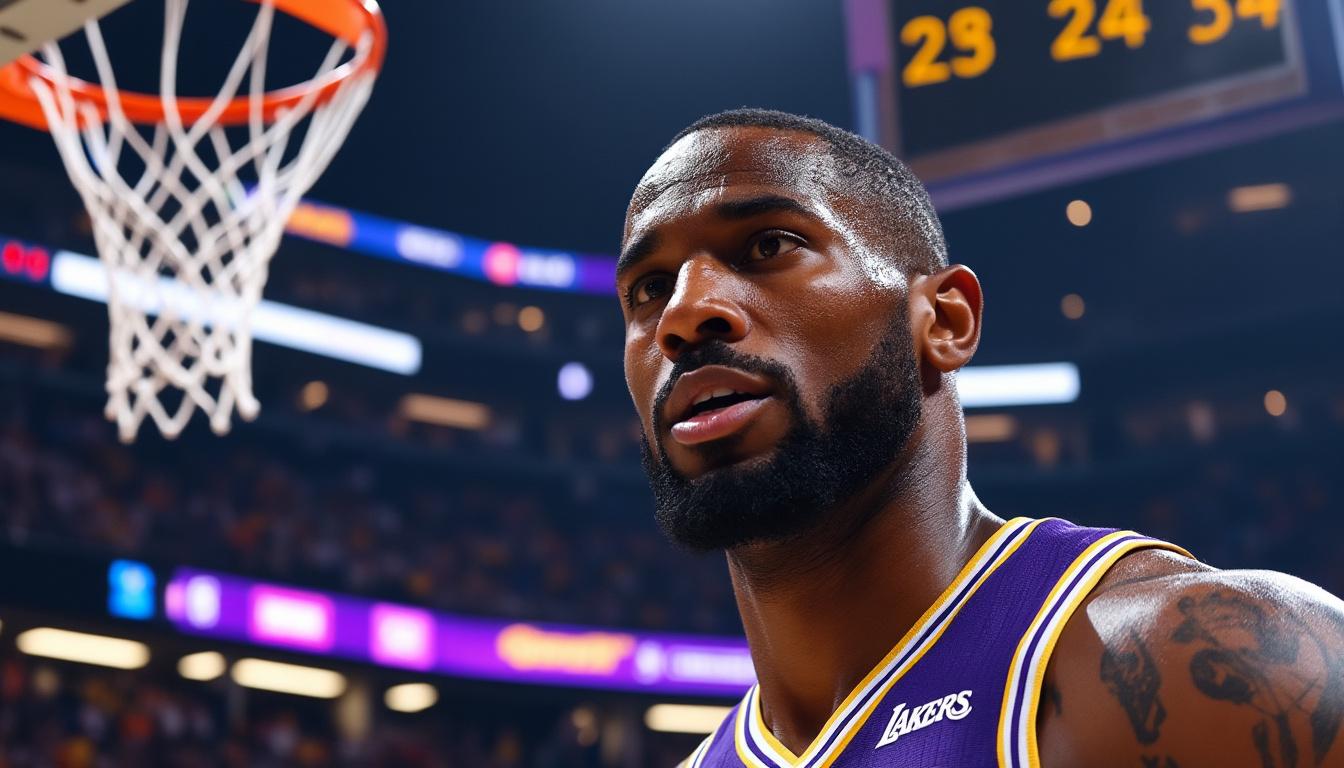
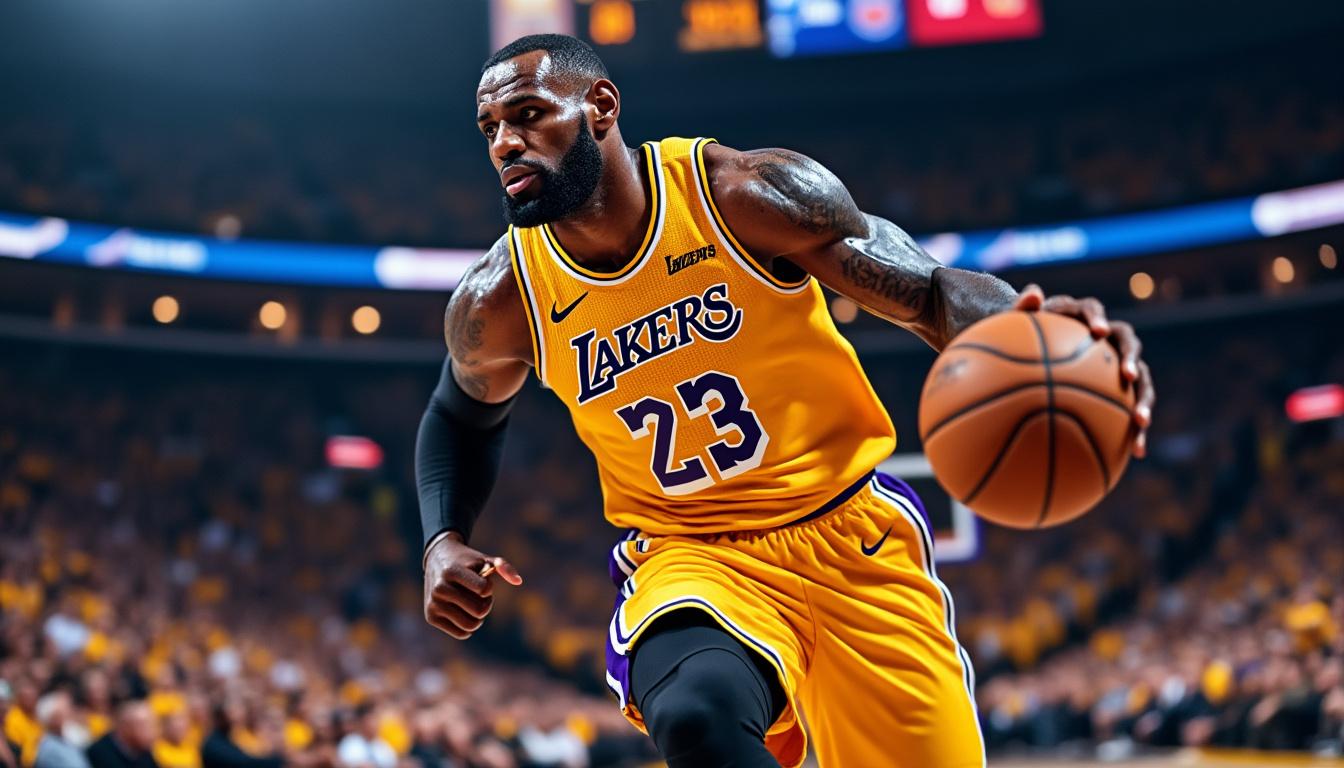
The Lakers’ offensive scheme reflects a sophisticated balance between star isolation plays and ball movement designed to optimize their shooters and playmakers alike. Luka Dončić continues to thrive as the team’s engine, orchestrating plays with his playmaking brilliance while elevating his scoring numbers during clutch moments. Meanwhile, LeBron James, approaching the twilight of his legendary career, remains a dominant force capable of changing games with his scoring, passing, and leadership.
This dynamic duo fuels the Lakers’ offensive ambitions, supported by shooters like Jake LaRavia and Rui Hachimura, who can stretch defenses and create spacing. Austin Reaves exemplifies the new wave of Lakers contributors, offering both scoring bursts and defensive effort, helping the team to maintain two-way balance during critical stretches.
Key aspects of the Lakers’ offensive approach include:
- Utilizing Luka’s elite court vision to find open shooters and cutters
- LeBron’s ability to control tempo and draw multiple defenders to create mismatches
- Spreading the floor with reliable three-point shooting, improving the team’s effective field goal percentage
- Incorporating quick ball reversals and pick-and-roll actions to keep defenses guessing
- Leveraging role players to sustain offensive pressure when the stars rest
| Player | Points per Game (Nov 2025) | Assists per Game (Nov 2025) | 3PT % (Nov 2025) |
|---|---|---|---|
| Luka Dončić | 28.5 | 9.1 | 37.5% |
| LeBron James | 24.4 | 7.8 | 34.2% |
| Jake LaRavia | 11.3 | 2.1 | 42.1% |
| Rui Hachimura | 12.7 | 1.5 | 36.0% |
Their offensive improvements have also been corroborated by external analysis highlighting the Lakers’ potential momentum in a crowded field of NBA contenders this season. Nonetheless, challenges remain in terms of offensive turnovers and occasional scoring droughts under pressure. These issues may come under scrupulous attention as the season progresses and playoff stakes intensify.
Coach JJ Redick’s Growing Pains and Tactical Adjustments to Build Two-Way Consistency
JJ Redick’s inaugural season as Lakers head coach delivered a mix of promise and criticism. His fresh offensive ideas injected energy and creativity but were shadowed by perceived conservative play-calling in crunch time, including overreliance on favored lineups that some felt limited versatility. The start of 2025-26 posed fresh challenges, with Redick navigating roster turnover, injury management, and the need for a more cohesive defensive identity.
However, as November wears on, signs emerge that Redick is adapting and learning the nuances of NBA head coaching. His rotation decisions have become more fluid, and he’s shown a willingness to experiment with mixing veterans and young talent, balancing minutes to sustain energy and sharpen the team’s two-way play. Additionally, we see a clearer strategic emphasis on defensive communication and transition management — essential for the Lakers to stem runs from explosive Western Conference offenses.
Recent coaching adjustments include:
- More aggressive bench utilization to maintain tempo and defensive effort
- Strategic lineup changes emphasizing defensive versatility without sacrificing offense
- Increased trust in two-way players like Austin Reaves and Trey Jemison in key situational roles
- Continuing to refine late-game play-calling to mitigate past criticisms
- Enhanced practice focus on defensive rotations and help responsibilities
| Area | October 2025 | November 2025 | Improvement |
|---|---|---|---|
| Rotations Flexibility (Lineup Changes per Game) | 4.1 | 6.3 | +2.2 |
| Defensive Communication Rating* | 68% | 78% | +10% |
| Late Game Efficiency | 0.98 PPP (points per possession) | 1.05 PPP | +0.07 |
*Based on team internal tracking.
While still evolving, these adjustments point towards a coaching staff intent on building resilience and adaptability—traits critical for sustained success. Support from star players has been consistent, with LeBron and Dončić expressing optimism about the direction the team is headed under Redick’s stewardship.
Bench Contributions and The Role of Two-Way Players in Forming Depth
Depth is often the backbone of enduring success, especially when the season inevitably brings injury and fatigue. The Lakers’ bench — particularly the two-way players — has been under particular scrutiny early in the 2025 campaign. With frustrating gaps evident in earlier months, the integration of players like Austin Reaves and Trey Jemison has offered a much-needed injection of energy and defense off the pine.
Reaves is notable for his two-way play, combining aggressive perimeter defense with timely scoring bursts, making him indispensable as a Spark Plug. Jemison, while less heralded, has proved valuable for his rebounding and rim-protecting presence, providing crucial minutes to help alleviate the starters’ workload. Additionally, Jake LaRavia’s sharpshooting continues to expand the offensive toolbox, offering space for the primary creators to operate.
Bench unit strengths include:
- Defensive intensity from a fresh lineup during late-game sequences
- Spacing and shooting abilities that complement star-driven offenses
- Flexibility in covering multiple positions and matchup adaptability
- Reliable ball movement to maintain offensive flow under pressure
- Developmental potential that bodes well for future rotations
| Bench Player | Minutes per Game | Points per Game | Defensive Rating |
|---|---|---|---|
| Austin Reaves | 22.4 | 13.2 | 102.5 |
| Trey Jemison | 15.7 | 6.4 | 105.1 |
| Jake LaRavia | 19.3 | 11.3 | 104.0 |
Improving the bench remains a priority. Roster moves expected before the January trade deadline include possible conversions of two-way contracts into full roster spots and strategic signings to augment depth. The team’s ability to cultivate two-way consistency from beyond their stars will likely define their staying power in the heated race for playoff positioning.
Lakers’ Momentum and Outlook for Maintaining Two-Way Consistency Through December and Beyond
Looking ahead, the Lakers face a challenging stretch filled with high-stakes matchups that will truly test whether their late November form check indicates sustainable progress. As the team breaks down film and refines strategies, attention focuses on maintaining intensity on both ends of the floor, reducing turnovers, and sharpening execution during crunch moments.
With the Western Conference packed with talented contenders, every game holds significance in the quest for a top-tier seed. The Lakers’ combination of veteran experience and emerging talent has the makings of a potential powerhouse, but only if they continue improving their defensive identity without sacrificing offensive fluidity.
Experts monitoring the team’s trajectory note several critical areas for focus:
- Continuing to reinforce defensive fundamentals in transition and pick-and-roll coverage
- Balancing superstar usage to avoid fatigue and keep starters fresh
- Resolving bench depth challenges by maximizing two-way player impact
- Clutch performance improvements, particularly in late-quarter scenarios
- Thoroughly preparing for high-profile rematches, such as upcoming games against the Celtics and Suns
| Upcoming Matchup | Date | Importance | Key Focus |
|---|---|---|---|
| Los Angeles Lakers vs Boston Celtics | Friday, December 5 | High | Clutch defense and rebounding |
| Los Angeles Lakers vs Phoenix Suns | Saturday, December 13 | Critical | Handling pick-and-roll offense |
| Los Angeles Lakers vs New Orleans Pelicans | Wednesday, December 17 | Moderate | Bench production and pace control |
The greatness of a Lakers season often hinges on developing a resilient team sense balanced across offense and defense. While NBA pundits have spotlighted the Lakers in various power rankings and playoff projection models, the ultimate question remains: can LA maintain this newfound balance and consistency over the coming months?
Keeping an eye on the evolving matchup strategies and individual player growth will be fascinating, as the Lakers seek to solidify themselves among the West’s elite and respond to the critics who have questioned their stability since the season began.
What does ‘two-way consistency’ mean for the Lakers?
Two-way consistency refers to the Lakers maintaining steady performance on both offense and defense. It means being reliable in scoring while also limiting opponents’ points, achieving balance across all game phases.
How has JJ Redick adjusted his coaching style in 2025?
Redick has moved toward more flexible rotations, greater trust in bench players, and a sharper defensive focus while working to improve crunch-time decision-making.
Which players have been key to the Lakers’ defensive improvement?
DeAndre Ayton’s rebounding and rim protection, Marcus Smart’s perimeter defense, and bench players like Austin Reaves have all contributed to better defensive metrics.
What are the Lakers’ biggest challenges heading into December 2025?
Sustaining two-way consistency, managing player fatigue, improving bench depth, and delivering under late-game pressure are primary concerns as the season intensifies.
How significant was the offseason trade involving Luka Dončić for the Lakers?
Acquiring Luka Dončić reshaped the Lakers’ offensive identity and set high expectations for championship contention, even though it also necessitated adjustments after Anthony Davis’s departure.